January 26, 2026

№ 2 (11), 2026. The Second Trump Administration and the Russia-US Relations

January 22, 2026

№ 1 (10), 2026. Nuclear Weapons: What Future for Arms Control?

January 21, 2026

№ 1 (49), 2025. PIR Center hosted a seminar titled «Nuclear Weapons of the United Kingdom and France: Implications for the Balance within the Nuclear Five»

December 30, 2025

PIR-Post №14 (36), 2025. Nuclear Nonproliferation Checkup: Is the Regime Fit for the Upcoming NPT Review Conference?

December 29, 2025

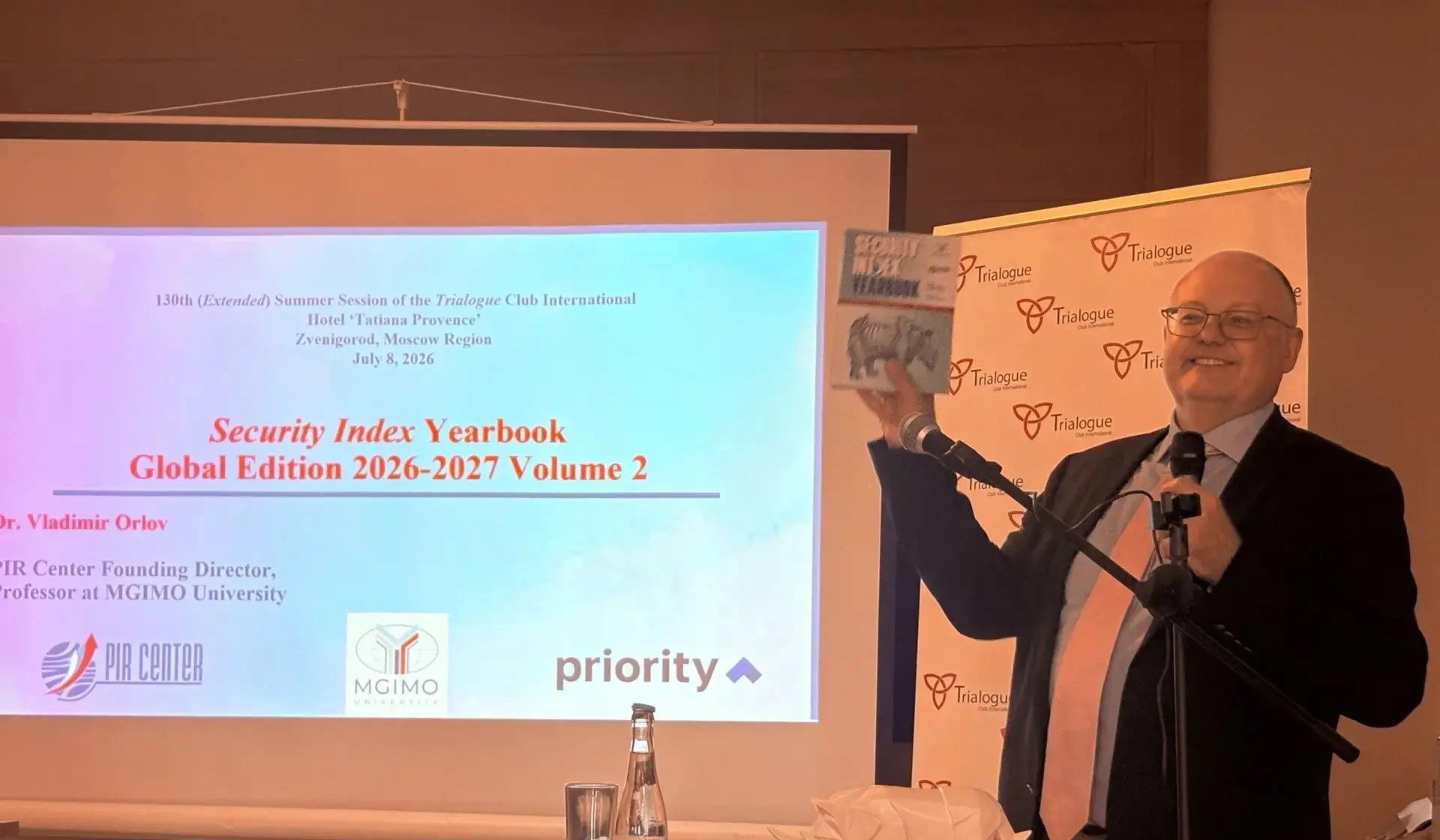
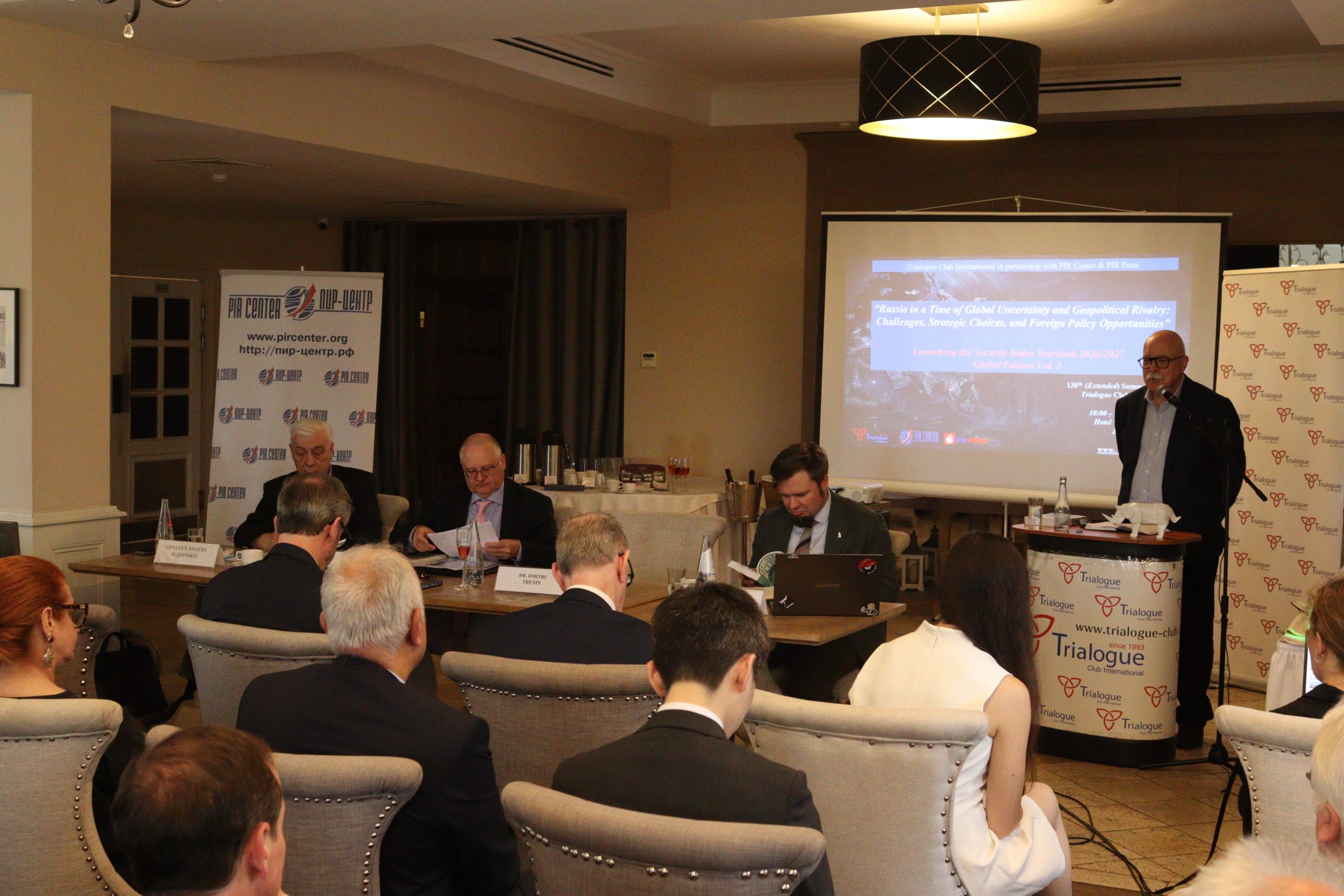
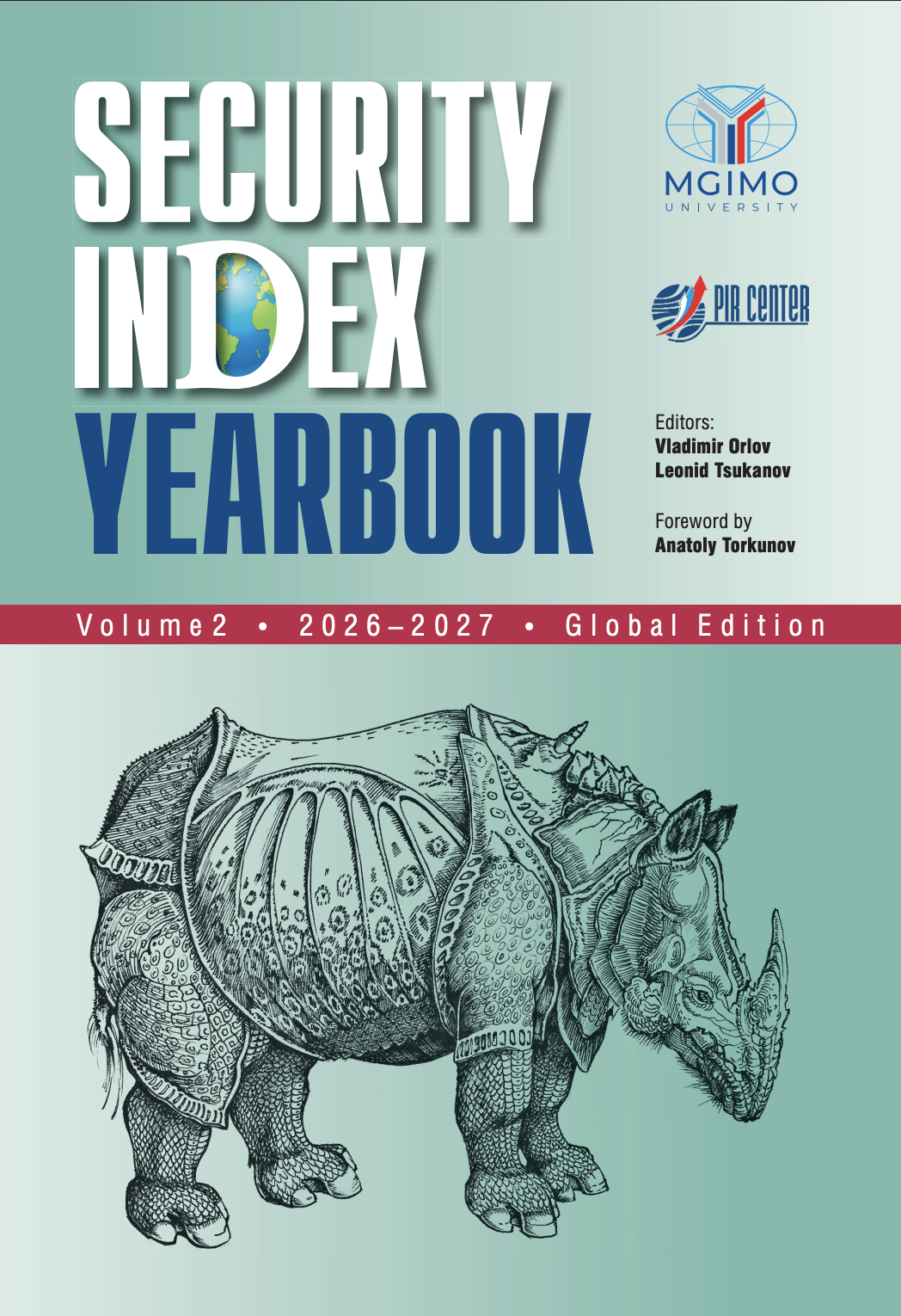
№ 48 (106), 2025. The digital edition of the Security Index Yearbook 2026-2027 by PIR&MGIMO Vol. 2 Digital Edition: a global premiere today

December 22, 2025

№ 14 (25), 2025. «Openness, Dynamism, Viability»: APEC in a Changing World Order

December 19, 2025

№ 9 (11), 2025. Russia’s Foreign and Security Priorities in the Era of World Turbulence

December 16, 2025

№ 8 (10), 2025. «The Greatest Common Denominator»: BRICS Cooperation in the Context of New Global Transformations

December 12, 2025

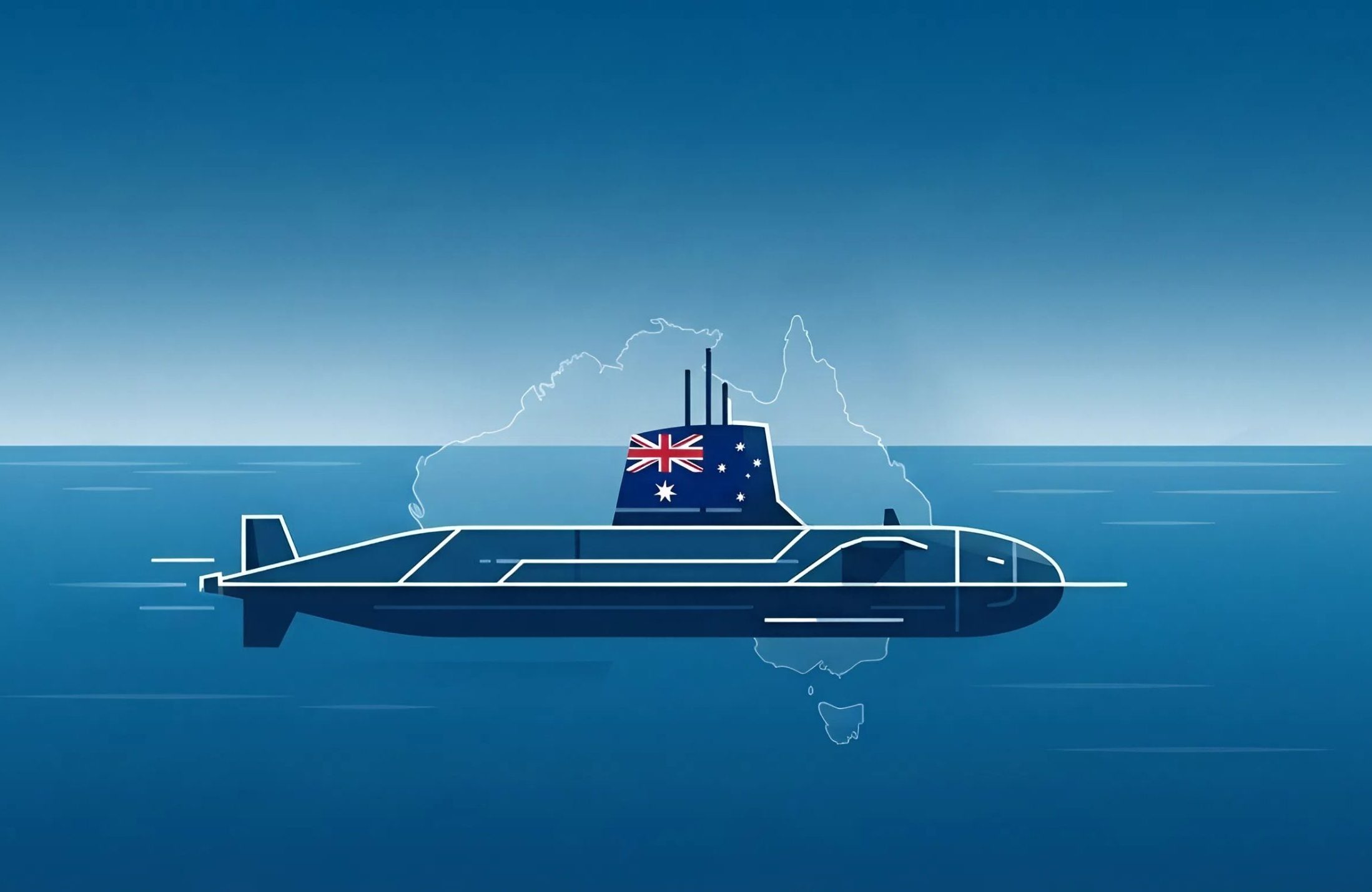
№ 7 (9), 2025. From Safeguards to Submarines: AUKUS as a Test Case for the Future of the Nonproliferation Regime

December 11, 2025

№ 46 (104), 2025. PIR Center invites members of PIR Alumni Community to join Trialogue Club International

December 9, 2025

№ 45 (103), 2025. International expert seminar on “Russia-Africa: Analyzing Prospects for Strategic Cooperation & Identifying Obstacles. From uranium to high technologies” was held in Moscow. It was organized by PIR Center in cooperation with the Trialogue Club International

December 4, 2025

№ 6 (8), 2025. Where AUKUS came from and how the world met it?

December 1, 2025

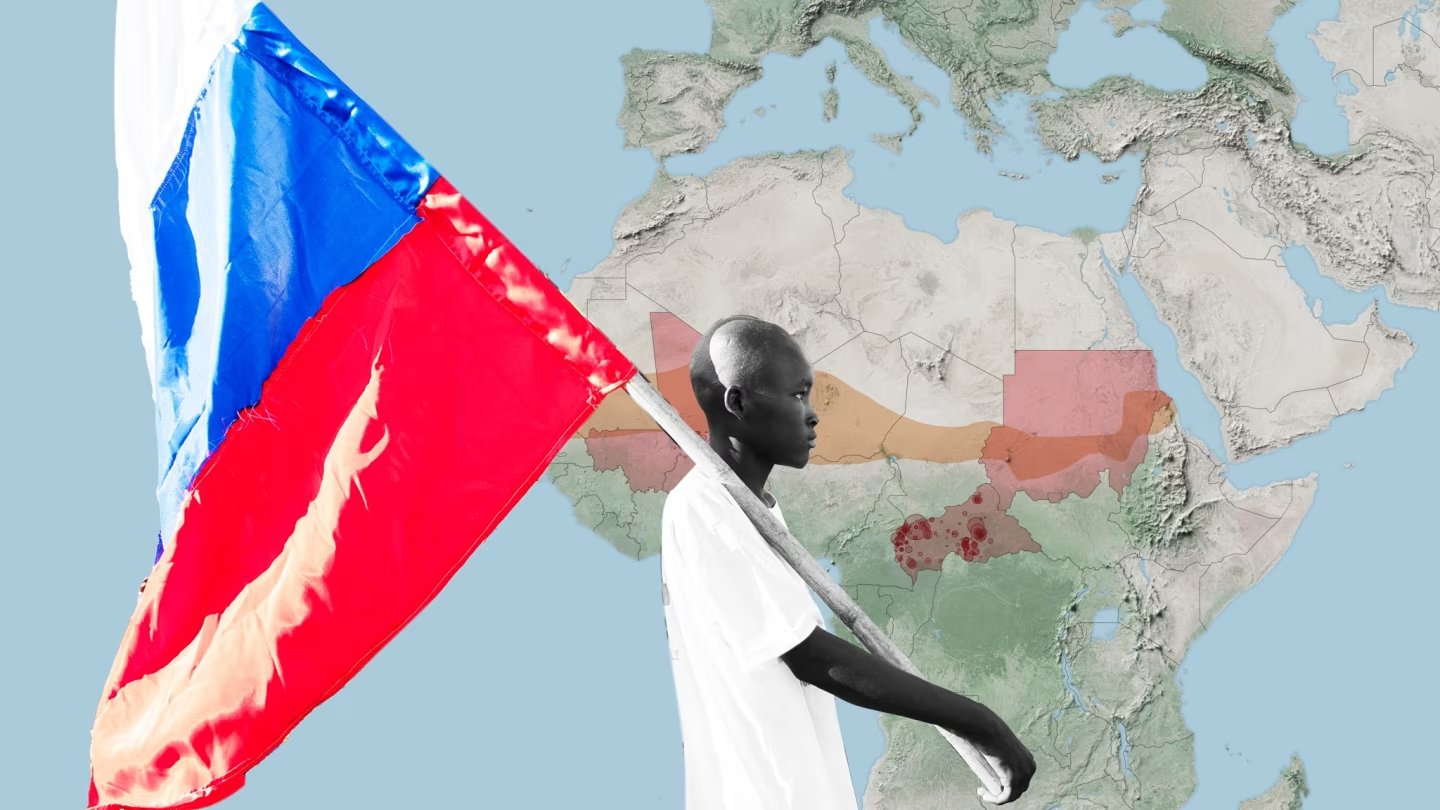
№ 43 (101), 2025. PIR Center Report Series: “Uranium Competition in the Sahel Region and Russia’s Interests. Current Situation. Assessment of Prospects. Recommendations”

November 25, 2025

Our Awards

November 21, 2025

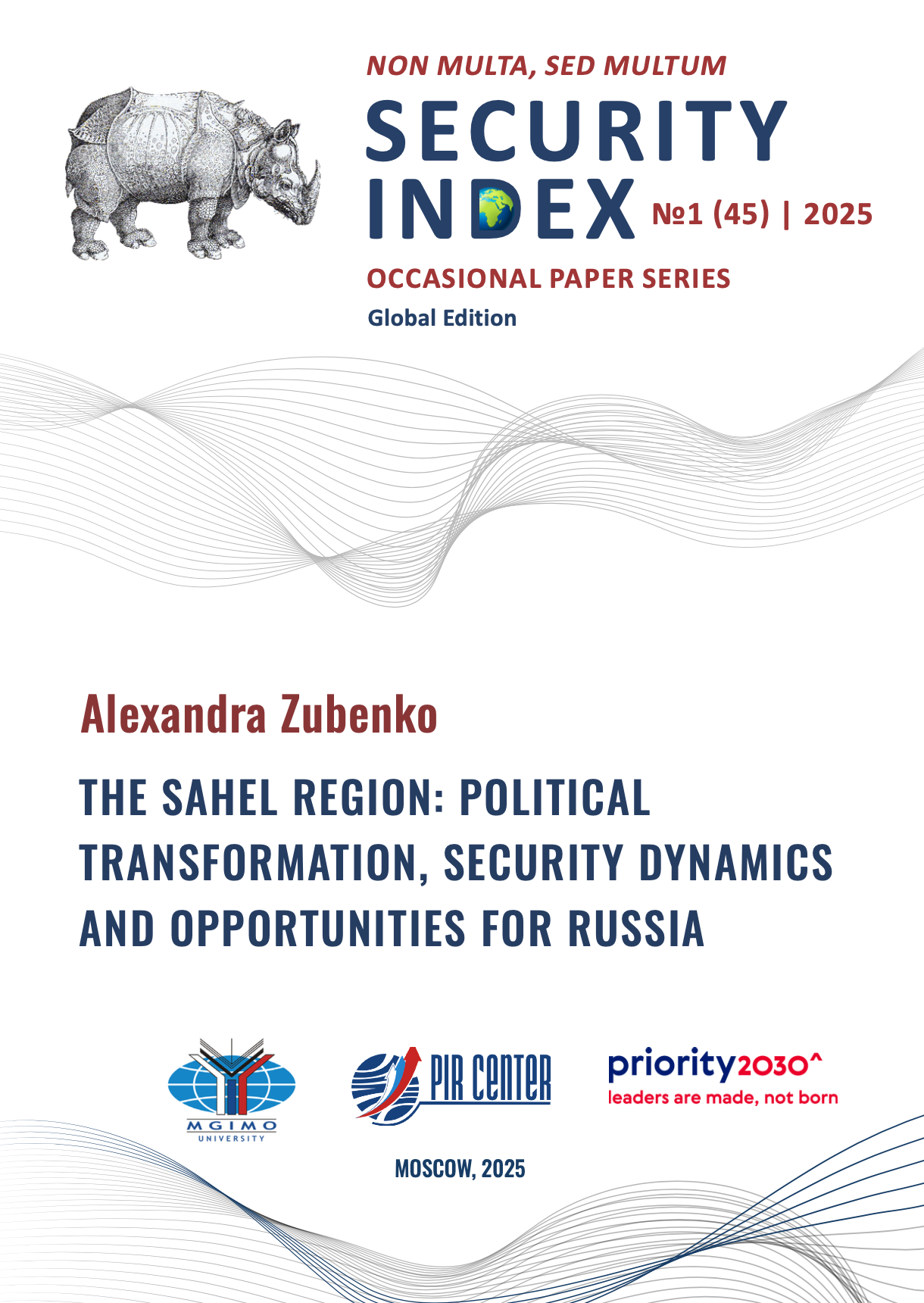
№ 42 (100), 2025. PIR Center Publishes a New Occasional Paper of Security Index on the Sahel Region: Political Transformation, Security Dynamics and Opportunities for Russia

November 19, 2025

№ 13 (24), 2025. From the NPT to Outer Space: How Russia Sees the Future of Arms Control

November 15, 2025

Yaderny Kontrol (Nuclear Control) E-Bulletin. №4 (543). November, 2025

October 30, 2025

№ 11 (21), 2025. Zaporozhskaya NPP: between guarantees and reality: an interview with Mikhail Lysenko by Sergey Shahinov

October 27, 2025

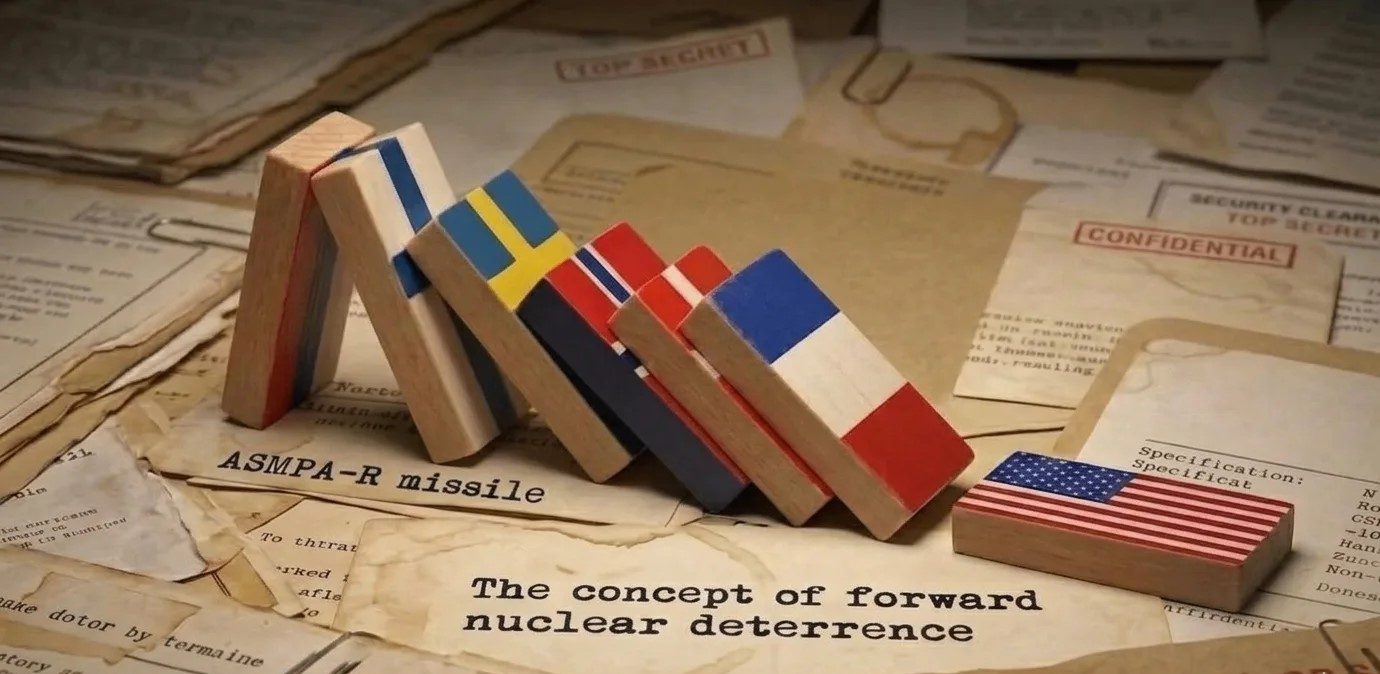
№ 37 (95), 2025. PIR Center Report Series: “Beyond the Bilateral: Retrospective Analysis of the issue of British and French Nuclear Arsenals Offset in US-Russian Strategic Stability Dialogue”

September 28, 2025

№ 4 (6), 2025. US Strikes on Iran: Timeline and OSINT Damage Assessment

September 2, 2025

PIR Post № 7 (29), 2025. JCPOA at a Deadlock: Disputes Over the Snapback Mechanism and the Future of UNSCR 2231

August 22, 2025

We invite our readers to express their view on the Security Index Yearbook

August 8, 2025

№ 29 (87), 2025. PIR Center recalls memorable moments from the history of dual-degree MA program “Global Security, Nuclear Policy, and WMD Nonproliferation”

July 23, 2025

№ 28 (86), 2025. PIR Center invites members of PIR Alumni Community to join Trialogue Club International

July 8, 2025

№ 24 (82), 2025. The seventh cohort of students graduated from the International Dual Degree MA Program “Global Security, Nuclear Policy, and WMD Nonproliferation”

July 2, 2025

№ 23 (81), 2025. PIR Center introduces a new section on the website “Experts on the Prospects of the NPT 2026 Review Conference”

June 23, 2025

№ 21 (79), 2025. PIR Center introduces a new section on the website “Experts on Indefinite Extension of the NPT”

June 17, 2025

№ 20 (78), 2025. PIR Center introduces a new section on the website “Postcards from our Alumni”

October 28, 2024

Security Index Yearbook 2024-2025 by PIR&MGIMO Vol.1 Digital Edition is available online on our website!

October 27, 2025

Statement at a meeting with students of the “International Security” master’s program and graduates of the dual degree international master’s program “Global Security, nuclear policy, and WMD nonproliferation. [...]

October 27, 2025
Hot Topic № 13 (24), 2025. Nonproliferation of Nuclear Weapons is a Foreign Policy Priority for Russia
Ryabkov, Sergey A.
December 19, 2025

APEC is a significant and highly relevant forum for comprehensive discussions of economic cooperation issues in the Asia-Pacific region (APR). Its establishment in 1989 was prompted by the region’s transformation into the locomotive of the global economy. Moreover, it became clear that today’s international problems cannot be resolved without the involvement of the Global Majority. [...]

December 19, 2025
№ 14 (25), 2025. «Openness, Dynamism, Viability»: APEC in a Changing World Order
Berdyev, Marat V.

Security index

November 13, 2024

This occasional paper takes a look at the potential of Sub-Saharan African (SSA) states in the field of high technologies and the prospects for promoting Russia’s interests in this area.

November 13, 2024
№1 (45), 2025. The Sahel Region: Political Transformation, Security Dynamics and Opportunities for Russia
Zubenko, Alexandra S.
All posts
NPT
December 30, 2025

For a person who participated in all the NPT Review Conferences since 1995, this is […]

December 30, 2025
PIR-Post №14 (36), 2025. Nuclear Nonproliferation Checkup: Is the Regime Fit for the Upcoming NPT Review Conference?
Orlov, Vladimir A.
Africa
December 17, 2025

If we were to summarise the Russia-Africa relationship today, we could describe a traditional partner […]

December 17, 2025
№ 13 (35), 2025. Russia-Africa: Prospects for Strategic Cooperation and Identification of Obstacles. From Uranium to High Technologies
Mr. Joseph Kindundu Mukombo
November 21, 2025

On his way to make «America Great Again», Donald Trump has made yet another step […]

November 21, 2025
PIR-Post № 12 (34), 2025. Donald Trump Rocks the Boat by Endorsing South Korea’s Nuclear Submarine Program: Experts Assess Regional Security Implications
Kalinin, Roman R.

PIR Press News

All news
January 21, 2026

MOSCOW. JANUARY 21, 2026. PIR PRESS. «Throughout the entire period of the strategic dialogue between […]

January 21, 2026

№ 1 (49), 2025. PIR Center hosted a seminar titled «Nuclear Weapons of the United Kingdom and France: Implications for the Balance within the Nuclear Five»

December 29, 2025

MOSCOW, DECEMBER 29, 2025. PIR PRESS. «Volume Two of the Security Index Yearbook maintains the […]

December 29, 2025

№ 48 (106), 2025. The digital edition of the Security Index Yearbook 2026-2027 by PIR&MGIMO Vol. 2 Digital Edition: a global premiere today

December 25, 2025

MOSCOW. DECEMBER 25, 2025. PIR PRESS. «External factors have always influenced Iran’s nuclear program. Each […]

December 25, 2025

№ 47 (105), 2025. PIR Center hosted a seminar titled “The Impact of International Factors on the Development of Iran’s Nuclear Program and Tehran’s Strategic Decisions”

December 23, 2025

December 23, 2025

Season’s Greetings from PIR Center

January 26, 2026

Donald Trump’s return to the White House in November 2024 reignited discussions about whether U.S.-Russian relations might evolve into a new phase. [....]

January 26, 2026
The Second Trump Administration And The Russia-US Relations
Kortunov, Andrey V.
August 28, 2025

On July 4, 2025, the International Colloquium on the role of artificial intelligence in shaping the future international order was held in Hong Kong. The event, organized by the Asian Academy of International Law in partnership with the AAIL Foundation and the Chinese Society of International Law, gathered experts from 47 jurisdictions worldwide, with more than 250 participants in total. [...]

August 28, 2025
Artificial Intelligence in Shaping the Future International Order: Outcomes of the International Colloquium in Hong Kong – Report by Vadim Kozyulin from Hong Kong
Kozyulin, Vadim B.
January 16, 2025

Since their coup against Yemen’s legitimate government in 2014, the Houthis have been a key instigator of a prolonged civil war that has now lasted more than a decade... [...]

January 16, 2025
The Houthi Threat to Regional Security: Lessons Learned from the Events of January 17
Dr. Mohammed Abdullah Al-Ali

Nuclear Chronometer

The U.S. and Great Britain sign an agreement replacing the Quebec Agreement. According to it Great Britain refused its veto right regarding the U.S. use of atomic weapons and permitted the U.S. to purchase up to two thirds of the

President Kennedy announces the imposition of quarantine on Cuba; the beginning of the acute phase of "Caribbean Crisis".

The USSR and IAEA sign the Agreement on Application of the IAEA Safeguards in the USSR

James Chadwick’s (Great Britain) article "Possible Existence of a Neutron" is printed.

February 17, 1932

Die Naturwissenschaften receives a paper by O. Hahn and F. Strassmann entitled "Concerning the Existence of Alkaline Earth Metals Resulting from Neutron Irradiation of Uranium.

December 22, 1938

Albert Einstein writes a letter to President Roosevelt saying, in particular, that uranium may be turned into a new and important source of energy in the future and quick action on the part of the Administration may be required.

August 2, 1939

Academicians V.I. Vernadsky, A.T. Fersman and V.G. Khlopin are charged by the Presidium of the Academy of Sciences of the USSR to outline measures to speed up work on the use of atomic energy.

June 25, 1940

F. D. Roosevelt proposes joint development of an atomic bomb to W. Churchill.

October 11, 1940

The Presidium of the Academy of Sciences of the USSR approves a work plan submitted by the Commission on Uranium Work.

October 15, 1940

The U.S. Administration decides to appropriate necessary funds for creating an atomic bomb.

December 6, 1941

L.P. Beria signs a letter for State Defense Committee of the USSR to briefly describe documents regarding the use of uranium for military purposes and the activities of the British Uranium (MAUD) Committee, which NKVD obtained from Great Britain.

March 10, 1942

The Manhattan Project to create an atomic bomb is launched in the U.S.

July 13, 1942

Germany successfully tests the Fau-2 (V-2) ballistic missile. It becomes the world’s first missile to break the speed of sound.

August 16, 1942

The State Defense Committee of the USSR directed the People’ Commissariat for Non-Ferrous Metallurgy to start mining uranium ore in Tajikistan.

November 27, 1942

The first sustained chain nuclear reaction at a Chicago reactor built under the guidance of E. Fermi.

December 2, 1942

A State Defense Committee of the USSR directive creates Laboratory №2 tasked to acquire uranium fission energy and study into the possible military application of the energy of uranium. I.V. Kurchatov is designated the Head of Laboratory.

February 11, 1943

The secret Quebec agreement between the U.S. and the UK is signed concerning transfer of the atomic weapons creation project (with participation of the British scientists) to the United States. The parties committed that they would

August 12, 1943

The first bombing of London with Fau-1 (V-1) cruise missiles.

June 13, 1944

Niels Bohr writes a Memorandum to President Roosevelt where he expresses deep concerns about the likelihood of post-war disagreements between the states regarding the atomic issue.

July 3, 1944

The beginning of military application of Fau-2 missiles. By March 1945, London and Antwerp suffered 4,300 Fau-2 missile attacks.

September 7, 1944

At 0529 the U.S. tests (coded Trinity) of a 21 kiloton-yield atomic (plutonium) bomb near Alamogordo, New Mexico.

July 16, 1945

President Truman’s states to I.V. Stalin at the Potsdam Conference that the U.S. possesses a new weapon of unusual destructive force. The same day I.V. Stalin directed I.V. Kurchatov to expedite work on the Soviet atomic project.

July 25, 1945

A second atomic bomb is dropped on Nagasaki. The 20-kiliton, 3,157-kg bomb named Fat Man was dropped, resulting in 75,000 deaths.

August 9, 1945

An atomic bomb is dropped on Hiroshima, Japan. At 8:15 a.m. the B-29 bomber Enola Gay drops a 14-kiloton, 2,227-kg atomic bomb named Little Boy on Hiroshima, resulting in over 200,000 deaths and about 160,000 injured.

August 16, 1945

The State Defense Committee of the USSR issues a Directive to create a Special Committee chaired by L.P. Beria to work on "the use of the atomic energy of uranium" and "development of atomic bombs".

August 20, 1945

The First Main Directorate (FMD), subordinate to the Council of People's Commissars (CPC) of the USSR, is set up.

August 30, 1945

Creation of the Commissariate a l’Energie Atomique – CEA (Commissariat for Atomic Energy) in France, under the lead of F. Joliot-Curie.

October 18, 1945

Joint Communique by U.S. President Truman, UK Prime-Minister Attlee and Canada’s Prime-Minister King states that the leaders of these countries consider it necessary to keep the atomic bomb issue secret

November 15, 1945

The CPC of the USSR issues a directive to set up Laboratory B to develop the theory and calculation methods for fast neutron reactors and thermal neutron reactors. Today - the Russian Scientific Nuclear Center-Institute for Physics and Power Engineering

December 19, 1945

The adoption of the UN General Assembly resolution to create the UN Atomic Energy Commission.

January 24, 1946

Winston Churchill’s speech made at Fulton University in the U.S. The speech marks the beginning of the Cold War. W. Churchill opposes transfer of atomic secrets to UN jurisdiction.

March 5, 1946

The first meeting of the UN Atomic Energy Commission. Head of the U.S. delegation B. Baruch launches a proposal (Baruch’s Plan) to establish international control over atomic energy.

June 14, 1946

Head of the Soviet delegation in the UN Atomic Energy Commission A.A. Gromyko introduces a draft convention on the prohibition and elimination of atomic weapons within three months.

June 19, 1946

The McMahon Act is enacted, prohibiting transfer of atomic information to third countries including Great Britain and establishing the Atomic Energy Commission in the U.S.

August 1, 1946

The first Soviet low power research reactor F-1 is started. F-1 operation made available data to complete creation of the first production reactor.

December 25, 1946

The Council of Ministers of the USSR adopts a directive to construct a nuclear weapons test range for RDS-1 testing near Semipalatinsk.

April 24, 1947

The successful launch of the first American ballistic missile Corporal (range 125 km, warhead yield 31 kilotons).

May 22, 1947

The U.S. Atomic Energy Commission starts studying the peaceful uses of atomic energy.

October 6, 1947

The first Soviet ballistic missile is launched at the Kapustin Yar test range.

October 14, 1947

V.M. Molotov states that the atomic bomb is no longer a secret.

November 6, 1947

A working group headed by I.Ye. Tamm is created at the Institute of Physics of the AS of the USSR tasked to study the possibility of creating a hydrogen bomb.

June 10, 1948

The country’s first plutonium production reactor, located at Chelyabinsk-40, achieves design production capacity.

June 22, 1948

The first heavy water reactor in France starts production.

December 15, 1948

The Soviet Union conducts its first successful atomic bomb (RDS) test at Semipalatinsk test range. The charge yield is 22 kilotons.

August 29, 1949

The United States, NATO countries and Japan create the Coordinating Committee on Multilateral Export Controls (CoCom), which identified goods and technologies not subject to export to the USSR and other socialist countries.

November 22, 1949

A U.S. B-36 bomber, before crashing over the Pacific, drops an atomic bomb from a height of 2.5 kilometers (non-nuclear part of the charge exploded).

February 15, 1950

K.Ye. Voroshilov states that the USSR possesses an atomic bomb.

March 8, 1950

A U.S. B-29 bomber crashes on a mountain in New Mexico. The atomic explosives on board are partially burned

April 11, 1950

The U.S. starts operating the missile test rage and space-launching site at Cape Canaveral.

July 24, 1950

The Government of the USSR issues a directive to set up the Third Main Directorate subordinate to the Council of Ministers of the USSR to develop science and technology in the field of guided missiles, aircraft (weapons carriers)

February 3, 1951

The USSR decides to create thermonuclear weapons.

February 26, 1951

The USSR carries out the first atmospheric nuclear test (a bomb dropped from a Tu-4 bomber) at the Semipalatinsk test range.

October 18, 1951

The U.S. carries out the first underground nuclear test.

November 29, 1951

The UK conducts its first nuclear test near the Monte Bello Islands, near Australia. The yield is 25 kilotons.

October 13, 1952

The U.S. tests the world’s first thermonuclear device, named Mike, with a yield of 10.4 megatons, on one of the Marshall Islands.

October 31, 1952

The USSR approves the work plan to design Facility № 627 (a nuclear submarine codes name). N.A. Dollezhal is appointed the Chief Designer of the power generation installation and V.N. Peregudov - the Chief Designer for the nuclear submarine.

November 25, 1952

U.S. media report that the first nuclear artillery shell has been fired.

May 25, 1953

The Ministry of Medium Machine Building, the lead entity to carry out work in the field of nuclear science and technology, is created.

June 26, 1953

The first test of a Soviet hydrogen bomb, named RDS-6s, with a yield of 400 kilotons.

August 12, 1953

The beginning of design and building of the first nuclear 17,000-ton displacement icebreaker. I.V. Kurchatov is the Scientific Supervisor over the reactor physics and A.P. Aleksandrov is the Scientific Supervisor over the icebreaker

November 20, 1953

U.S. President D. Eisenhower addresses the UN General Assembly to propose the creation of the International Atomic Energy Agency (IAEA), which would exercise control over proliferation of nuclear technologies used for peaceful purposes.

December 8, 1953

The commissioning of USS Nautilus, the world's first nuclear-powered submarine.

January 21, 1954

A hydrogen bomb is tested at the Marshall Islands. It is the most powerful atmospheric explosion conducted by the U.S., at 125 megatons. The U.S.’s fist victim of nuclear weapons testing: one man died as a result of the explosion

February 28, 1954

India’s Prime-Minister J. Neru calls for a moratorium on nuclear testing.

April 2, 1954

The USSR commissions the first world commercial nuclear power plant (NPP) in the city of Obninsk (Kaluga Region).

June 27, 1954

The French Government makes the official decision to create nuclear weapons.

December 26, 1954

The Plenary Meeting of the Chinese Communist Party makes the strategic decision to develop its own nuclear forces, responding to U.S. threats to use nuclear weapons against China.

January 15, 1955

The Council of Ministers of the USSR makes the decision to assist socialist countries in research in the field of peaceful uses of atomic energy.

January 17, 1955

The USSR Government issues the directive to set up the Baikonur space-launching site near Tyura-Tam village, Kazakhstan, as a test range for testing and launching of combat missiles and space rockets.

February 12, 1955

First agreement between the USSR and the PRC concerning support in development of research in the field of atomic energy and nuclear physics in the PRC.

April 27, 1955

The United States and the United Kingdom sign the Atomic Technology Information Exchange Agreement.

June 15, 1955

The UN’s First International Conference on the Peaceful Uses of Nuclear Energy is held in Geneva.

August 20, 1955

The launch of the first Soviet nuclear submarine K-3 (Leninskiy Komsomol) in Molotovsk (today Severodvinsk).

September 24, 1955

The USSR tests a thermonuclear bomb called RDS-37 with a 1.6 megaton yield. The bomb’s new charge becomes the basis of Soviet nuclear weapons.

November 22, 1955

The first launch of a ballistic missile, which is named R-5M, with the nuclear charge. Conducted by the USSR.

February 2, 1956

A U.S.B-47 bomber carrying two nuclear charges disappears over the Mediterranean.

March 10, 1956

France launches a program to develop means of nuclear weapons delivery.

October 5, 1956

The IAEA Statute is adopted.

October 23, 1956

The PRC creates its nuclear ministry.

November 16, 1956

France sets up an atomic bomb development committee within the Commissariat for Atomic Energy.

December 5, 1956

The signing of the European Atomic Energy Community (Euroatom) Treaty in Rome. The Treaty came into force on January 1, 1958.

March 25, 1957

The commissioning of the USSR’s first launching complex for the missile ISM R-7. Referred to as the birthday of Baikonour Cosmodrome.

May 5, 1957

Great Britain tests its first hydrogen bomb (yield about 1 megaton).

May 15, 1957

The U.S. tests a nuclear charge with less than a 1-kiloton yield.

June 5, 1957

The IAEA Statute comes into force.

July 29, 1957

An explosion at a radioactive waste storage facility in Kyshtym (Chelyabinsk Region) results in vast land contamination.

September 29, 1957

Poland is offered a proposal, the Adam Rapacki Plan, to establish a zone free of nuclear weapons in Central Europe.

October 2, 1957

The USSR launches the Earth’s first artificial satellite (Sputnik).

October 4, 1957

The USSR and China sign an agreement under which the USSR commits to supplying China with an atomic bomb mock-up, missile and relevant technical documentation. The agreement remained unfulfilled and was denounced on June 20, 1959.

October 15, 1957

The first world nuclear propelled surface ship, the icebreaker Lenin, is commissioned.

December 5, 1957

The creation of the European Atomic Energy Agency within the Organization for European Economic Cooperation (today the Nuclear Energy Agency within the Organization for Economic Cooperation and Development).

December 20, 1957

The European Atomic Energy Community (Euroatom) Treaty enters into force.

January 1, 1958

The USSR unilaterally stops nuclear tests (until September 30) and calls for the western states to follow.

March 31, 1958

The U.S. launches the world’s first nuclear-propelled cargo ship, the Savannah.

May 22, 1958

Mao Zedong issues a directive challenging the PRC to create an atomic bomb, thermonuclear weapons and intercontinental missiles within 10 years.

June 21, 1958

The UK carries out its most powerful atmospheric nuclear explosion. The yield is 2.8 megatons.

September 11, 1958

Tor, the U.S.’ first medium ranger missile, arrives in Great Britain.

September 19, 1958

Great Britain conducts its last atmospheric nuclear weapons test.

September 23, 1958

In the UK, the keel is laid for the Dreadnought nuclear attack submarine, Great Britain’s first nuclear propulsion ship.

June 12, 1959

The U.S. launches the nuclear cargo ship Savannah.

July 21, 1959

The first launch of a Soviet ballistic missile from a silo launcher.

August 31, 1959

The Antarctic Treaty is signed in Washington, DC. At the territory of Antarctic "shall be prohibited, inter alia, any measures of a military nature". It also prohibits any nuclear explosions in Antarctica and the disposal of radioactive waste material.

December 1, 1959

The French government makes the decision to launch a national ballistic missile program.

December 1, 1959

The Soviet Union creates the Strategic Missile Forces (SMF), based on the missile and artillery forces models.

December 17, 1959

The commissioning of the world’s first SSBN, the USS George Washington in the U.S.

December 30, 1959

The France’s first nuclear test in Reggan, Algeria. The charge yield is 20-150 kilotons.

February 13, 1960

The PRC successfully launches the R-2 missile, created with assistance from the USSR.

September 10, 1960

The world largest missile catastrophe: an unauthorized start-up of the second stage engine of the R-16 missile on the launching pad of Baikonur killed, from 92 up to 150 people including SMF Commander-in-Chief Marshall of Artillery M.I. Nedelin

October 24, 1960

The adoption, by the initiative of Ireland, of the UN GA Resolution 1576 called for termination of wider proliferation of nuclear weapons.

December 20, 1960

The USSR does the world’s first in-flight interception and destruction of a ballistic missile warhead by anti-ballistic missile V-1000.

March 4, 1961

The explosion in Algeria of the French nuclear device, with incomplete fission cycle, to prevent it from falling into the hands of General M. Challe’s (former Commander-in-Chief in Algeria) mutineers who revolted against the French administration

April 25, 1961

The Antarctic Treaty comes into force.

June 23, 1961

The successful launch of the first solid-fuel BM of the U.S. Army – TM Sergeant (range 140 km; nuclear charge yield 60 and 120 kilotons).

September 28, 1961

The soviet first underground nuclear explosion (Semipalatinsk test range).

October 11, 1961

The tests of a 57-megaton yield thermonuclear device at Novaya Zemlya test site. The bomb is dropped from an aircraft.

October 30, 1961

China starts developing IBM capable of reaching the U.S.

November 14, 1961

The Eighteen-Nation Disarmament Committee states its work. The USSR and the U.S. designated as co-chairs of the Committee.

March 15, 1962

The CC CPSU and the Council of Ministers of the USSR issue the directive to develop a heavy inter-continental ballistic missile UR-500, which eventually transformed into the multi-purpose space missile Proton.

April 29, 1962

France carries out the first underground explosion at Sahara test range.

May 1, 1962

The Presidium of the CC CPSU decides to deploy medium-range missiles on Cuba (to protect Cuba from the U.S. invasion and to balance with the American Tor and Jupiter missiles deployed in the UK, Italy and Turkey).

May 24, 1962

A nuclear warhead is lost in the Pacific during a test launch of Tor missile.

June 4, 1962

The second case of loss of a nuclear warhead in the Pacific during Tor missile test.

June 20, 1962

N.S. Khrushchev makes the statement to withdraw all "offensive weapons" from Cuba.

October 28, 1962

The last U.S.’s atmospheric nuclear test.

November 4, 1962

The USSR agrees to withdraw medium-range bombers from Cuba and the U.S. announces the lifting of the quarantine of the island.

November 20, 1962

The USSR carries out the last atmospheric nuclear weapons test, at Novaya Zemlya.

December 25, 1962

The nuclear submarine USS Thresher is lost at sea. 129 perish

April 10, 1963

The Treaty Banning Nuclear Weapons Tests in the Atmosphere, in Outer Space and under Water is signed in Moscow.

August 5, 1963

The Treaty Banning Nuclear Weapons Tests in the Atmosphere, in Outer Space and under Water comes into force.

October 10, 1963

The PRC carries out its first atomic bomb test. The charge yield is 22 kilotons. The PRC makes a statement on non-use of nuclear weapons and vows not to threaten non-nuclear weapons states.

October 16, 1964

The USSR carries out the first underground nuclear explosion for peaceful purposes at the Grachevski oil deposit in Bashkiria.

January 15, 1965

The U.S. launches the first artificial satellite with a nuclear reactor on board.

April 13, 1965

A U.S. sea-borne aircraft with an atomic bomb onboard crashes 200 miles from Okinawa.

December 5, 1965

A U.S. B-52 bomber crashes in Spain with four thermonuclear bombs on board. Two of the bombs are damaged, resulting in the contamination of two hectares of soil.

January 17, 1966

The PRC sets up the Second Corps of Artillery, the Chinese version of the Soviet Missile Forces.

July 1, 1966

The Treaty on Principles Governing the Activities of States in the Exploration and Use of Outer Space, including the Moon and Other Celestial Bodies (The Outer Space Treaty) is signed.

January 27, 1967

A U.S. B-47 bomber loses a hydrogen bomb over U.S. territory.

February 6, 1967

The Treaty for the Prohibition of Nuclear Weapons in Latin America (Tlatelolco Treaty) is signed.

February 14, 1967

The PRC conducts its first hydrogen bomb test. The yield is 3.3 megatons, and the device is dropped from an aircraft.

June 17, 1967

The Treaty on Principles Governing the Activities of States in the Exploration and Use of Outer Space, including the Moon and Other Celestial Bodies (The Outer Space Treaty) comes into force.

October 10, 1967

The PRC’s first successful launch of a ballistic missile with the nuclear warhead.

October 27, 1967

Great Britain signs Additional Protocols I and II to the Treaty for the Prohibition of Nuclear Weapons in Latin America (Tlatelolco Treaty).

December 20, 1967

The U.S. signs Additional Protocol II to the Treaty for the Prohibition of Nuclear Weapons in Latin America (Tlatelolco Treaty).

April 1, 1968

The U.S. signs Additional Protocol II to the Treaty for the Prohibition of Nuclear Weapons in Latin America (Tlatelolco Treaty).

April 1, 1968

The Netherlands sign the first Additional Protocol to the Treaty for the Prohibition of Nuclear Weapons in Latin America (Tlatelolco Treaty).

April 1, 1968

The Nuclear Non-Proliferation Treaty (NPT) is opened for signing.

July 1, 1968

The first thermonuclear bomb test is conducted in France.

August 24, 1968

The Treaty for the Prohibition of Nuclear Weapons in Latin America (Tlatelolco Treaty) comes into force for the first eleven state parties.

April 25, 1969

The beginning of Soviet-American negotiations on anti-ballistic missile and strategic offensive arms limitation issues in Helsinki.

November 17, 1969

Additional Protocols I and II to the Treaty for the Prohibition of Nuclear Weapons in Latin America (Tlatelolco Treaty) come into force for Great Britain.

December 11, 1969

The Nuclear Non-Proliferation Treaty enters into force.

March 15, 1970

The signing of the Treaty on the Prohibition of the Emplacement of Nuclear Weapons and Other Weapons of Mass Destruction on the Sea-Bed, the Ocean Floor, and in the Subsoil Thereof.

February 11, 1971

Additional Protocol II to the Treaty for the Prohibition of Nuclear Weapons in Latin America (Tlatelolco Treaty) comes into force for the U.S.

May 12, 1971

The Additional Protocol I to the Treaty for the Prohibition of Nuclear Weapons in Latin America (Tlatelolco Treaty) comes into force for the Netherlands.

July 26, 1971

The signing in Washington DC of the Agreement between the U.S. and the USSR on Measures to Reduce the Risk of Outbreak of Nuclear War and the Agreement Between the U.S. and the USSR to Expand the U.S.-USSR Direct Communications Link.

September 30, 1971

The Convention on the Prohibition of the Development, Production and Stockpiling of Bacteriological (Biological) and Toxin Weapons and on Their Destruction is opened for signing

April 10, 1972

The Treaty on the Prohibition of the Emplacement of Nuclear Weapons and Other Weapons of Mass Destruction on the Sea-Bed, the Ocean Floor, and in the Subsoil Thereof comes into force.

May 18, 1972

The signing of the Treaty between the USSR and the U.S. on the Limitation of Anti-Ballistic Missile Systems and the Interim Agreement on Certain Measures with Respect to the Limitation of Strategic Arms.

May 26, 1972

The ABM Treaty and the SALT I Interim Agreement come into force.

October 3, 1972

The beginning of the Soviet-American SALT II negotiations in Geneva.

November 21, 1972

France signs the Additional Protocol II to the Treaty for the Prohibition of Nuclear Weapons in Latin America (Tlatelolco Treaty).

July 18, 1973

China signs the Additional Protocol II to the Treaty for the Prohibition of Nuclear Weapons in Latin America (Tlatelolco Treaty).

August 21, 1973

The Additional Protocol II to the Treaty for the Prohibition of Nuclear Weapons in Latin America (Tlatelolco Treaty) comes into force for France.

March 22, 1974

The test of the Indian nuclear explosive device; power yield 10 to 20 kilotons.

May 18, 1974

The Additional Protocol II to the Treaty for the Prohibition of Nuclear Weapons in Latin America (Tlatelolco Treaty) comes into force for China.

June 2, 1974

The signing of the Protocol to the Treaty between the U.S. and the USSR on the Limitation of Anti-Ballistic Missile Systems. The Protocol reduced for each side from two to one the number of permitted ABM deployment areas.

July 3, 1974

The adoption of two Memorandums of the Zangger Committee. Memorandum A defined the source and special fissionable materials. Memorandum B gave the description of equipment or material designed to work with fissionable material.

August 14, 1974

France carries out its last atmospheric nuclear test.

September 15, 1974

Secretary General of the CC CPSU L.I. Brezhnev meets U.S. President G. Ford in Vladivostok where the Vladivostok Agreements on limitation of strategic offensive arms are adopted.

November 24, 1974

Kosmos-520 satellite detects the night launch of the American IBM Minitmen-2 missile. The factual start-up of the Soviet space echelon of the missile attack warning system.

December 24, 1974

The Convention on the Prohibition of the Development, Production and Stockpiling of Bacteriological (Biological) and Toxin Weapons and on Their Destruction comes into force.

March 26, 1975

The first meeting of the Nuclear Suppliers Group (NSG).

April 23, 1975

Nuclear Suppliers Group’s negotiators exchange letters approving the Guiding Principles for Nuclear Exports.

January 27, 1976

The USSR Government makes the decision to place the ballistic missile RSD-10 (SS-20) Pioneer on combat duty.

March 11, 1976

The Protocol to the ABM Treaty permitting each side to have only one ABM deployment area comes into force.

May 24, 1976

The treaty between the USSR and the U.S. on Underground Nuclear Explosions for Peaceful Purposes is signed.

May 28, 1976

The PRC carries out its most powerful nuclear test, blasting a 4-megaton device.

November 17, 1976

The U.S. signs Additional Protocol I to the Treaty for the Prohibition of Nuclear Weapons in Latin America (Tlatelolco Treaty).

May 26, 1977

The 15 NSG member-states reach agreement on the Guiding Principles for Nuclear Exports.

September 21, 1977

The U.S. Department of Energy is created.

October 1, 1977

The Voluntary Offer Safeguards Agreement between the U.S. and the IAEA to cover several nuclear facilities in the U.S. is signed.

November 18, 1977

The USSR commissions the Kirov nuclear-propelled cruiser.

December 27, 1977

The formal submission of the Nuclear Suppliers Group’s Guiding Principles for Nuclear Exports to the IAEA, which issues them as INFCIRC/254 in February 1978.

January 11, 1978

The Soviet Union signs Additional Protocol II to the Treaty for the Prohibition of Nuclear Weapons in Latin America (Tlatelolco Treaty).

May 18, 1978

The IAEA Voluntary Offer Agreement (with the participation of Euroatom) regarding the peaceful nuclear activities of Great Britain comes into force.

August 14, 1978

First underground nuclear explosion in the PRC.

October 14, 1978

Additional Protocol II to the Treaty for the Prohibition of Nuclear Weapons in Latin America (Tlatelolco Treaty) comes into force for the USSR.

January 8, 1979

The 39-member-state Disarmament Committee Meeting meets with France present for the first time.

January 24, 1979

France signs Additional Protocol I to the Treaty for the Prohibition of Nuclear Weapons in Latin America (Tlatelolco Treaty).

March 2, 1979

An accident at the Three Mile Island-2 nuclear power plant in Harrisburg, Pennsylvania (U.S.) results in severe reactor vessel damage.

March 28, 1979

At the USSR-U.S. Vienna Summit, L.I. Brezhnev and J. Carter sign the Treaty on the Limitation of Strategic Offensive Arms (SALT II), which never comes into force.

June 18, 1979

The NATO member-states decide to deploy, beginning in 1983, 572 American medium-range missiles in five West-European states.

December 12, 1979

The Convention on Physical Protection of Nuclear Material is signed.

March 3, 1980

The Chinese conduct an atmospheric nuclear explosion. It is the last atmospheric nuclear explosion on the Earth.

October 16, 1980

The IAEA Voluntary Offer Agreement regarding the peaceful nuclear activities of the U.S. comes into force.

December 9, 1980

China commissions its first SSBN, the Xia.

April 30, 1981

Israeli aircraft bomb the Ozirak nuclear reactor in Iraq. The reactor was being built with French assistance at a site near Baghdad

June 8, 1981

U.S. President R. Reagan starts the full-scale production of neutron weapons.

August 6, 1981

The IAEA Voluntary Offer Agreement (with participation of Euroatom) regarding the peaceful nuclear activities of France comes into force.

September 12, 1981

The Additional Protocol I to the Treaty for the Prohibition of Nuclear Weapons in Latin America (Tlatelolco Treaty) comes into force for the U.S.

November 23, 1981

The USSR’s Tu-160 heavy bomber makes its first flight.

December 19, 1981

The launch of the first Chinese SLBN, named JL-1.

October 12, 1982

U.S. President R. Reagan announces the beginning of work on the Strategic Defense Initiative (SDI).

March 23, 1983

U.S. Pershing II missiles are deployed on West German territory. The Soviet delegation leaves the MRM Geneva negotiations.

November 23, 1983

The 1983 Committee on the Disarmament Session decides to initiate the Conference on Disarmament.

February 7, 1984

A U.S. man dies as a result of a underground nuclear explosion.

February 15, 1984

The USSR and the U.S. start nuclear and space armaments (NSA) negotiations in Geneva.

March 12, 1985

The USSR and IAEA Agreement on Application of the IAEA Safeguards comes into force for the USSR.

June 10, 1985

The signing of the South Pacific Nuclear Free Zone Treaty (the Treaty of Rarotonga).

August 6, 1985

The USSR declares a unilateral moratorium on nuclear tests. It lasts 19 months.

August 6, 1985

The DPRK officially joins the NPT Treaty.

December 12, 1985

Secretary General of the CC CPSU M.S. Gorbachev outlines a nuclear weapons elimination program that will conclude in 2000.

January 15, 1986

An explosion at the Chernobyl nuclear power plant near Kiev (USSR) involves loss of life.

April 26, 1986

U.S. President R. Reagan makes the statement that the U.S. will not be base their strategic arms structure decisions on the Treaty on the Limitation of Strategic Offensive Arms (SALT II).

May 27, 1986

The Convention on Early Notification of a Nuclear Accident and the Convention on Assistance in the Case of a Nuclear Accident or Radiological Emergency are opened for signing.

September 26, 1986

Soviet SSBN K-219 with 16 ballistic missiles on board suffers an accident in the Northern Atlantic. Four crewmen die.

October 6, 1986

The Convention on Early Notification of a Nuclear Accident comes into force.

October 27, 1986

The South Pacific Nuclear Free Zone Treaty (the Treaty of Rarotonga) enters into force.

December 11, 1986

The USSR signs Protocols 2 and 3 to the South Pacific Nuclear Free Zone Treaty (the Treaty of Rarotonga).

December 15, 1986

The Convention on Early Notification of a Nuclear Accident enters into force for the USSR.

January 24, 1987

The Convention on Physical Protection of Nuclear Material comes into force.

February 8, 1987

China signs Protocols 2 and 3 to the South Pacific Nuclear Free Zone Treaty (the Treaty of Rarotonga).

February 10, 1987

The Convention on Assistance in the Case of a Nuclear Accident or Radiological Emergency enters into force.

February 26, 1987

The USSR resumes nuclear tests, citing a lack of action on its initiatives by other nuclear weapons states, primarily the U.S.

February 26, 1987

The Missile Technology Control Regime (MTCR) is established during the G7 Rome Summit.

April 7, 1987

The Agreement between the USSR and U.S. on Establishing Centers for Reducing Nuclear Danger and two additional protocols to it are signed in Washington, DC.

September 15, 1987

The Convention on Assistance in the Case of a Nuclear Accident or Radiological Emergency of 1986 and the Convention on Early Notification of a Nuclear Accident of 1986 enter into force for China

October 11, 1987

Protocols 2 and 3 to the South Pacific Nuclear Free Zone Treaty (the Treaty of Rarotonga) come into force for the USSR.

April 21, 1988

The Treaty Between the U.S. and the USSR on the Elimination of Intermediate-Range and Shorter-Range Missiles comes into force.

June 1, 1988

The U.S. conducts its activities under the joint U.S.-USSR experiment on nuclear test monitoring in Nevada.

August 17, 1988

The Soviet Union conducts its activities under the joint U.S.-USSR experiment on nuclear test monitoring in Semipalatinsk.

September 14, 1988

The Convention on Assistance in the Case of a Nuclear Accident or Radiological Emergency of 1986 and the Convention on Early Notification of a Nuclear Accident of 1986 enter into force for the U.S.

October 20, 1988

Protocols 2 and 3 to the South Pacific Nuclear Free Zone Treaty (the Treaty of Rarotonga) come into force for China.

October 21, 1988

The Agreement between India and Pakistan on Prohibition of Attack Against Nuclear Installations and Facilities is signed.

December 31, 1988

The Convention on Physical Protection of Nuclear Material of 1980 comes into force for China.

February 9, 1989

The Convention on Assistance in the Case of a Nuclear Accident or Radiological Emergency of 1986 and the Convention on Early Notification of a Nuclear Accident of 1986 enter into force for France.

April 6, 1989

The Secretary General of the Soviet Union, M.S. Gorbachev, states that the USSR will stop production of highly enriched uranium.

April 7, 1989

The nuclear submarine Komsomolets is lost in the Norwegian Sea. 42 are lost.

April 7, 1989

The IAEA Voluntary Offer Agreement regarding the peaceful nuclear activities of China comes into force.

September 18, 1989

South African President F. De Klerk ends development of nuclear weapons and eliminates available nuclear devices.

February 26, 1990

President G. Bush and Secretary General M. Gorbachev sign protocols to the treaty between the U.S. and the USSR on the Limitation of Underground Nuclear Weapon Tests and the treaty between the U.S. and USSR on Peaceful Underground Nuclear Explosions

June 1, 1990

Representatives of the USSR, Great Britain, the U.S., France, FRG and GDR sign the Treaty on the Final Settlement with Respect to Germany, stating that nuclear weapons or their delivery vehicles will not be deployed in the territory of the former GDR.

September 12, 1990

The USSR conducts its last nuclear test at the Novaya Zemlya test range.

October 24, 1990

The Treaty between the U.S. and the USSR on the Limitation of Underground Nuclear Weapon Tests and the Treaty between the USSR and the U.S. on Underground Nuclear Explosions for Peaceful Purposes come into force.

December 11, 1990

The Agreement between India and Pakistan on the Prohibition of Attack Against Nuclear Installations and Facilities comes into force.

January 28, 1991

The Treaty on the Final Settlement with Respect to Germany, also known as the "2 Plus 4 Treaty", stating that nuclear weapons or their delivery vehicles will not be deployed in the territory of the former GDR, comes into force.

March 15, 1991

The UN Security Council adopts Resolution 687 on Iraq. The Resolution provides for a Special Commission (UNSCOM) that will be responsible for the elimination of Iraqi Weapons of Mass Destruction.

April 3, 1991

Two of the last Soviet medium-range missiles RSD-10 (SS-20) are eliminated at Kapustin Yar test range about 200 km from Volgograd. This marks the completion by the US and the USSR of the previous agreements to eliminate medium and shorter-range missiles.

May 12, 1991

The signing in Prague of the Protocol on Termination of the Treaty of Friendship, Cooperation and Mutual Assistance signed in Warsaw on May 14, 1955 and its Extension Protocol signed in Warsaw on April 26, 1985.

July 1, 1991

South Africa joins the NPT Treaty as a non-nuclear weapons state.

July 10, 1991

Brazil and Argentina sign the Agreement for the Exclusively Peaceful Use of Nuclear Energy (the Guadalajara Agreement), providing for creation of mechanisms of control over nuclear equipment through reciprocal inspections.

July 18, 1991

In Moscow, the USSR and the U.S. sign the Treaty of the Reduction and Limitation of Strategic Offensive Arms (START I).

July 31, 1991

Kazakhstan President N.A. Nazarbayev issues Decree № 409 to shutdown the Semipalatinsk nuclear test range.

August 29, 1991

French President F. Mitterand announces the elimination of Pluton missiles and AN-53 nuclear bombs.

September 11, 1991

US President G. Bush Sr. proposes unilateral initiatives regarding U.S. tactical nuclear weapons.

September 27, 1991

USSR President M.S. Gorbachev proposes unilateral initiatives regarding USSR tactical nuclear weapons.

October 5, 1991

The Convention on Physical Protection of Nuclear Material of 1980 comes into force for France.

October 6, 1991

Russia President B.N. Yeltsin signs a directive "On Termination of Nuclear Weapons Testing at Novaya Zemlya Test Range".

October 26, 1991

Great Britain conducts its last nuclear test.

November 26, 1991

The U.S. adopts the Soviet Nuclear Threat Reduction Act (Nunn-Lugar Act), which provides for funding to facilitate elimination of Soviet nuclear and chemical weapons.

November 27, 1991

American nuclear weapons are withdrawn from South Korea.

December 18, 1991

Belorussia, Russia, Kazakhstan and Ukraine sign an Agreement on the Joint Measures of Control over Nuclear Weapons. In accordance with the agreement, new countries commit to withdraw all nuclear weapons and return them to Russia by July 1, 1992.

December 21, 1991

The Joint Declaration of the Denuclearization of the Korean Peninsula is signed by the DPRK and the Republic of Korea.

January 20, 1992

The President of the Russian Federation issues a decree on establishing the Ministry of Atomic Energy of the Russian Federation

January 28, 1992

B.N. Yeltsin’s initiates unilateral action regarding tactical nuclear weapons.

January 29, 1992

Russia President B.N. Yeltsin’s address "On Russia’s Policy in the Field of Arms Limitation and Elimination" states that Russia is the heir of all nuclear materials of the USSR.

January 29, 1992

The DPRK and IAEA sign an agreement on Application of IAEA Safeguards.

January 30, 1992

The UN Security Council Chairman issues a statement concerning disarmament, arms, weapons of mass destruction control, and non-proliferation of nuclear weapons.

January 31, 1992

The withdrawal of tactical nuclear weapons from Kazakhstan is completed.

February 1, 1992

The Joint Declaration of the Denuclearization of the Korean Peninsula signed by DPRK and the Republic of Korea comes into force.

February 19, 1992

China joins the Nuclear Non-Proliferation Treaty as the forth nuclear weapons state.

March 19, 1992

The signing of the Treaty on Open Skies in Helsinki.

March 24, 1992

Russia’s President issues a decree "On Control Over Export from the Russian Federation of Nuclear Materials, Equipment and Technologies". The decree is recognized as the adoption of comprehensive safeguards by Russia

March 27, 1992

The Nuclear Suppliers Group member-states adopt the Comprehensive Safeguards Statement in Warsaw.

April 3, 1992

In Warsaw the Nuclear Suppliers Group member-states adopt guidelines for transfer of nuclear-related dual-use equipment, materials, software and related technology.

April 3, 1992

The Agreement on Application of IAEA Safeguards between the DPRK and IAEA comes into force

April 10, 1992

Russia’s President issues a decree "On the Measures to Establish the Export Control System in the Russian Federation"

April 11, 1992

The withdrawal of tactical nuclear weapons from Belorussian territory to Russia is completed.

April 28, 1992

The withdrawal of tactical nuclear weapons from Ukrainian territory to Russia is completed. Nuclear weapons in the custody of the Black Sea Navy remain.

May 6, 1992

The CIS countries sign the Agreement on Collective Security. Signatories include Azerbaijan, Armenia, Belarus, Georgia, Kazakhstan, Kyrgyzia, Russia, Tajikistan, and Uzbekistan.

May 15, 1992

The Republic of Belarus, the Republic of Kazakhstan, the Russian Federation, Ukraine, and the USA sign a protocol to the treaty between the USA and the USSR on the Reduction and Limitation of Strategic Offensive Arms, also known as the Lisbon Protocol

May 23, 1992

The framework between Russia and the U.S. on further reduction of strategic offensive arms is agreed.

June 17, 1992

Agreement between the U.S. and Russia is reached on the "Safe and Secure Transportation, Storage and Destruction of Weapons and the Prevention of Weapons Proliferation".

June 17, 1992

In Minsk Armenia, Belarus, Kazakhstan, Kyrgyzia, Russia, Tajikistan, Uzbekistan and Ukraine sign the "Agreement on Export Control over Raw Materials, Materials, Equipment, Technologies and Services Usable for Creation of Weapons of Mass Destruction".

June 26, 1992

In Minsk Armenia, Belarus, Kazakhstan, Kyrgyzia, Russia, Tajikistan, Uzbekistan and Ukraine sign the "Agreement of the Basic Principles of Cooperation in the Field of Peaceful Uses of Atomic Energy".

June 26, 1992

The Parliament of Kazakhstan ratifies the START 1 Treaty.

July 2, 1992

U.S. President G. Bush announces the completion of withdrawal of land and sea-based tactical nuclear weapons as planned by the unilateral initiative of September 27, 1991.

July 2, 1992

France joins the Nuclear Non-Proliferation Treaty as the fifth nuclear weapons state.

August 3, 1992

Russia and Iran sign the Agreement on Peaceful Uses of Atomic Energy.

August 17, 1992

Additional Protocol I to the Tlatelolco Treaty comes into force for France.

August 24, 1992

The U.S. conducts its last nuclear test.

September 23, 1992

The Supreme Soviet of Russia ratifies the START I Treaty.

November 4, 1992

The signing of the Agreement between the Government of the Russian Federation and the Government of the French Republic on Cooperation in the Area of Safe Elimination of Nuclear Weapons in Russia and the Peaceful Uses of Released

November 12, 1992

The signing of the Agreement Establishing an International Science and Technology Center (by Russia, the U.S., Japan and Euroatom, and the European Economic Community).

November 27, 1992

The signing of the Agreement between the Government of the Russian Federation and the Government of the Federal Republic of Germany Concerning Assistance to the Russian Federation in the Elimination of Nuclear and Chemical Weapons

December 16, 1992

The export control regime over the dual-use items established by the Nuclear Suppliers Groups comes into force.

January 1, 1993

The Supreme Soviet of Belarus ratifies the START I Treaty.

February 4, 1993

The signing of the Russia-U.S. Agreement Concerning the Disposition of Highly Enriched Uranium Extracted from Nuclear Weapons, also know as the HEU-LEU Agreement.

February 18, 1993

DPRK officially notifies the UN Security Council that it will withdrawal from the Nuclear Non-Proliferation Treaty in three months.

March 12, 1993

President F. De Klerk states that the Republic of South Africa had been developing and producing six nuclear weapon devices, however, it dismantled and eliminated them before joining the Nuclear Non-Proliferation Treaty

March 24, 1993

DPRK announces suspension of its NPT Treaty withdrawal procedure.

June 11, 1993

Belarus joins the Nuclear Non-Proliferation Treaty as a non-nuclear weapons state.

July 22, 1993

The U.S. Congress adopts the "Cooperative Threat Reduction Act".

October 11, 1993

The signing of the Agreement between the Russian Federation and Japan on Cooperation in Elimination of Nuclear Weapons to Be Reduced and the Establishment of the Respective Committee.

October 13, 1993

The signing of the Agreement between the Governments of Russia and France concerning cooperation in safe and secure transportation of nuclear weapons in Russia.

October 20, 1993

The RF Security Council approves the "Basic Provision of the Military Doctrine of the Russian Federation".

November 2, 1993

The signing of the Trilateral Statement by the Presidents of Russia, the United States of America and Ukraine paving the way to incorporate Ukraine into the international non-proliferation regime and eliminating nuclear weapons in

January 14, 1994

Russia and the U.S. decide to no longer aim strategic missiles at each other. The action is to occur on May 30, 1994.

January 14, 1994

Kazakhstan joins the Nuclear Non-Proliferation Treaty as a non-nuclear weapons state.

February 14, 1994

Russia and Great Britain decide to no longer aim strategic missiles at each other, commencing May 30, 1994.

February 15, 1994

The signing of the Agreement between Russia and Kazakhstan on Strategic Nuclear Forces Temporarily Located in the Kazakhstan Territory.

March 28, 1994

DPRK announces its withdrawal from the IAEA.

June 13, 1994

300 grams of weapons plutonium, which arrived on a Moscow flight, are put under custody in Munich airport.

August 10, 1994

The Convention on Nuclear Safety is opened for signing.

September 21, 1994

Russia and Saudi Arabia have signed a joint Program for cooperation in the peaceful uses of nuclear energy

October 5, 2017

Start of exploration for uranium deposits in Saudi Arabia

December 17, 2017

Saudi Arabia has approved a national nuclear energy program

March 13, 2018

US withdrew from the Joint Comprehensive Plan of Action on Iran’s Nuclear Program

May 8, 2018

Commencement of construction of the first nuclear research reactor in Saudi Arabia

November 6, 2018

Citizens of Taiwan voted in a referendum against banning nuclear power since 2025

November 24, 2018

The UN General Assembly adopted Russian Resolution 73/27 on the establishment of the Open-ended Working Group (OEWG) on countering cybercrimes

December 5, 2018

The UN General Assembly decided to convene a Conference on the establishment of the Middle East zone free of nuclear weapons and other weapons of mass destruction and their means of delivery

December 22, 2018

Russian Ministry of Defence conducted the first successful flight test of the "Avangard" hypersonic rocket complex

December 26, 2018

The Pentagon presented the new US Missile Defense Review

January 17, 2019

US has announced a suspension of its participation in the Intermediate-Range Nuclear Forces Treaty

February 1, 2019

Russia has announced a suspension of its participation in the Intermediate-Range Nuclear Forces Treaty

February 2, 2019

The beginning of a new armed confrontation between India and Pakistan, which lasted until March 2019

February 26, 2019

The Second US-North Korea Non-proliferation Summit in Hanoi

February 27, 2019

India successfully tested its anti-satellite weapon

March 27, 2019

A Russia-North Korea summit was held in Vladivostok

April 25, 2019

North Korea conducted operational missiles test

May 4, 2019

In response to the new sanctions, Iran has ceased to adhere to the limits on enriched uranium stocks agreed in the JCPOA

May 8, 2019

North Korea conducted operational missiles test

May 9, 2019

A new version of the US Nuclear Operations Doctrine was published, allowing the use of nuclear weapons as a battlefield weapon

June 11, 2019

Iran announced a second phase of the reduction of commitments under the JCPOA and started enriching uranium above 3.67 percent

July 7, 2019

North Korea conducted operational missiles test

July 25, 2019

Intermediate-Range Nuclear Forces Treaty expired

August 2, 2019

US conducted the first ground-based cruise missile test with a range greater than 500 km after the breakup of the INF Treaty

August 19, 2019

Ambassador Roland M. Timerbaev died

August 21, 2019

Iran has announced the third phase of reduction of JCPOA commitments and has lifted restrictions on research activities by launching an additional 30 centrifuges for uranium enrichment

September 6, 2019

Iran has moved to the fourth phase of reduction its JCPOA commitments

November 6, 2019

The first session of the Conference on the establishment of the Middle East zone free of nuclear weapons and other weapons of mass destruction and their means of delivery was started in New York

November 18, 2019

Countries participating in the Conference on the establishment of the Middle East zone free of nuclear weapons and other weapons of mass destruction and their means of delivery adopted a declaration in the end the first session

November 23, 2019

Rafael Grossi became the new IAEA Director General

December 2, 2019

The first missile regiment, armed with the hypersonic rocket system "Avangard", was put on alert in Russia

December 27, 2019

Qasem Souleimani, Chief of Special Operations of the Iranian Revolutionary Guard Corps, was killed in Iraq

January 3, 2020

In response to the assassination of Qasem Souleimani, Iran announced a final, fifth phase of the reduction of JCPOA obligations

January 6, 2020

The X NPT Review Conference (2020) was postponed for the first time

March 26, 2020

Russia conducted an anti-satellite weapon test

April 15, 2020

US has announced its intention to withdraw from the Open Skies Treaty

May 21, 2020

The "Fundamentals of the State Nuclear Deterrence Policy of the Russian Federation" were released, the conditions for the use of nuclear weapons by Russia were specified

June 2, 2020

USA adopted "Space Defense Strategy" in response to "threat" from Russia and China

June 17, 2020

The IAEA Board of Governors, in its resolution, called upon Iran to cooperate fully and promptly with the Agency

June 19, 2020

China has acceded to the Arms Trade Treaty (ATT)

July 7, 2020

The first US Space Doctrine was published, it described the goals and principles of US space forces

August 10, 2020

The administration of President Donald Trump has uncovered US demands for the extension of the New-START. Russia has declared them unacceptable

September 20, 2020

Beginning of the Six-Week War in Nagorno Karabakh

September 27, 2020

Honduras ratified the Treaty for the Prohibition of Nuclear Weapons, bringing the Treaty into force in 90 days

October 24, 2020

The President of Azerbaijan, Ilham Aliyev, the Prime Minister of Armenia, Nikol Pashinyan, and the President of Russia, Vladimir Putin, signed a declaration on a ceasefire in Nagorno Karabakh

November 9, 2020

Beginning of deployment of Russian peacekeepers in Nagorno Karabakh

November 10, 2020

The US conducted a successful test of the SM-3 Block IIA interceptor missile. The target of the interceptor missile imitated an ICBM

November 16, 2020

The US withdrew from the Open Skies Treaty

November 22, 2020

Iranian nuclear physicist Mohsen Fahrizade was killed

November 27, 2020

Treaty for the Prohibition of Nuclear Weapons entered into force

January 22, 2021

President of Russia Vladimir Putin and US President Joe Biden agreed to extend New-START until 2026

January 26, 2021

The State Duma of the Russian Federation voted to extend the New-START until 2026

January 27, 2021

The New-START was officially extended until 2026

February 3, 2021

The session of the IAEA Board of Governors on the return of the US and Iran to the JCPOA concluded in Geneva. As a result of the session, Iran agreed to negotiate with IAEA in one month

March 5, 2021

A new British Defense Policy Review was published, the UK will increase the nuclear arsenal by 45 percent

March 16, 2021

Russian State Duma unanimously adopted a bill submitted by the President of the Russian Federation, Vladimir Putin, on the denunciation of the Treaty on Open Skies

May 19, 2021

Russian President Vladimir Putin signed the law on denunciation of the Treaty on Open Skies

June 7, 2021

Talks between Russian President Vladimir Putin and US President Joe Biden took place in Geneva

June 16, 2021

Robert Floyd has become a new Executive Secretary of the CTBT Preparatory Commission

August 1, 2021

AUKUS trilateral defense alliance (Australia, UK, USA) was announced

September 15, 2021

Russia successfully tested the anti-satellite weapon destroying the inactive Soviet satellite "Tselina-D"

November 15, 2021

The UN General Assembly approved, without a vote, the United States-Russian resolution on the norms of conduct in cyberspace and on the prevention of crime in that area

December 7, 2021

Russia officially withdrew from the Open Skies Treaty

December 18, 2021

The leaders of the Russian Federation, the People’s Republic of China, the United States, Britain, and France adopted a joint statement against nuclear war

January 3, 2022
August 29, 2025

(1) Reduction in the number of installed uranium enrichment centrifuges at the Natanz facility; (2) Limitation of uranium enrichment levels to 3.67% for 15 years; (3) Transfer of 97% of enriched uranium stockpiles out of the country or their dilution; (4) Iran’s renunciation of the development and use of civilian nuclear energy. [...]

August 29, 2025
Which of the following provisions is not part of Iran’s main obligations under the JCPOA (2015)?

Online-courses

All courses
April 10, 2024

Online-course on nuclear nonproliferation and arms control

November 25, 2025

We would like to recall the chapter authored by Mr. Nikita Degtyarev and Mr. Sergey Semenov, “Nuclear Sharing Arrangements: Military-Technical Aspects and Controversies,” which was first published in PIR Center’s collective monograph “Russia-U.S. Nuclear Nonproliferation Dialogue: Lessons Learned and Road Ahead” (2021). The authors offer an in-depth overview of the evolution of nuclear-sharing practices and the factors that have brought this issue back into current strategic stability discussions. [...]

November 25, 2025
«Nuclear Sharing Arrangements: Military Technical Aspects and Controversies» — from the chapter by Nikita Degtyarev and Sergey Semenov, first published in PIR Center’s collective monograph «Russia-U.S. Nuclear Nonproliferation Dialogue: Lessons Learned and Road Ahead», 2021
Degtyarev, Nikita S., Semenov, Sergey D.
July 23, 2025

“Inheriting the Bomb: The Collapse of the USSR and the Nuclear Disarmament of Ukraine” is a thorough study of one of the most significant events in the history of international security: Ukraine’s nuclear disarmament process in the 1990s. The work combines historical analysis with reflections on international institutions and geopolitical forecasting, making it a unique contribution to the study of nuclear nonproliferation [...]

July 23, 2025
Ukraine: The Long Road to the NPT
Shakhov, Yuriy A.
August 2, 2024

Security Index Yearbook 2024-2025 Global Edition is a unique collection of analytical materials on the most burning issues of the global and regional agendas in times of growing international tension and Russian approaches to them. [...]

August 2, 2024
Security Index Yearbook 2024-2025 Global Edition

PIR Toast

January 24, 2026

Today Dr. Vasily Lata, Lieutenant-General (ret.), Doctor of Military Sciences, Chief Research Fellow at the […]

January 24, 2026

Vasily Lata celebrates his 82nd birthday

PIR Center Partners